
When a Sydney home needs more than a cosmetic update, one of the first decisions is who will coordinate the work. Should you engage one renovation builder to manage the job, or hire the carpenter, plumber, electrician, plasterer, tiler and other trades separately? Both arrangements can work in the right circumstances. The difference is not simply the number of invoices. It is who takes responsibility for the programme, interfaces between trades, approvals, workmanship and problems discovered after opening the existing house.
For a small, clearly defined repair, direct engagement of a qualified trade may be straightforward. For a whole-house renovation, extension or structurally involved alteration, a suitably licensed builder managing multiple trades can offer a clearer coordination structure. The right choice depends on the scope, your ability to manage site risks, and the contracts you actually sign.
First, define the renovation you are buying
A project described as a “renovation” might be new paint and cabinets, or it might involve moving walls, replacing windows, changing plumbing layouts, altering roof lines and connecting new spaces to an occupied house. Those are very different management problems.
Before choosing a contracting model, prepare a room-by-room scope. Mark which elements are retained, demolished, moved or newly installed. Identify whether services will be relocated, whether walls are load-bearing, whether asbestos or damp may be present, and whether anyone will live in the house during the work. An early discussion of these issues is part of planning a practical Sydney home renovation, not something to leave until the trades arrive.
Option 1: Employ a renovation builder to coordinate the project
Under a builder-managed arrangement, you generally contract with a builder for an agreed scope and price structure. The builder may engage subcontractors and organise the work as part of their contractual obligations. You need to check the licence and contract rather than assume that a person calling themselves a “project manager” takes on all building responsibilities.
What good coordination should cover
- Sequencing: demolition, structural works, services rough-in, inspections, linings, waterproofing, tiling, joinery and finishing work in the right order.
- Interfaces: getting the plumber, electrician and carpenter to agree where pipes, cables, frames and fittings must fit.
- Scope control: recording what is included, what has not been allowed for and how a proposed change will be priced.
- Site management: practical access, material storage, protection of retained finishes and the safety arrangements relevant to the project.
- Quality checks: identifying hold points before work is covered up and arranging rectification where required by the contract.
A single builder does not make unexpected conditions disappear. Older houses may conceal water damage, unsupported alterations, unsuitable floor levels or ageing services. What matters is whether the contract and communication process make these discoveries manageable.
Option 2: Engage and manage individual trades yourself
You may instead contract separately with the people doing each work package. This can make sense where tasks are genuinely independent, such as replacing a few fittings or painting rooms that do not require structural alterations. It can also be appropriate for an owner with substantial building knowledge and time, provided the licensing and approval arrangements are lawful.
However, coordinating multiple trades is an active role. It includes preparing a common scope, scheduling access, confirming each trade’s dependencies, sourcing materials, resolving drawing conflicts and following up defects. For example, a kitchen installation can stall because an electrical outlet is in the wrong position, the wall lining is not ready or the floor finish is thicker than assumed. Each contractor may have completed the job they were asked to do, but the combined result may still fail to meet the homeowner’s expectations.
Hiring several contractors directly does not automatically remove the need for licences, approvals, insurance or appropriate written contracts. Nor does it automatically qualify you to perform regulated building work yourself.
The real comparison: scope, accountability and time
| Question | Builder-managed renovation | Separately managed trades |
|---|---|---|
| Who plans the sequence? | Generally the builder for the contracted scope | Usually the homeowner or separately appointed manager |
| Who resolves trade clashes? | Typically coordinated through the builder | Often requires homeowner decisions and rebooking |
| How are costs compared? | One defined scope with stated exclusions and allowances | Several quotes that must collectively cover the full scope |
| Who monitors work interfaces? | Builder’s agreed supervision and quality process | Owner or appointed consultant must arrange coordination |
| Where can it suit? | Complex, multi-room, structural or occupied-home projects | Limited, independent packages with clear boundaries |
The table describes typical arrangements, not a substitute for reading your contracts. A poorly documented builder contract can still cause disputes; a well-organised specialist team can deliver an excellent outcome. The key is whether every responsibility is explicitly assigned.
Five situations where project coordination matters most
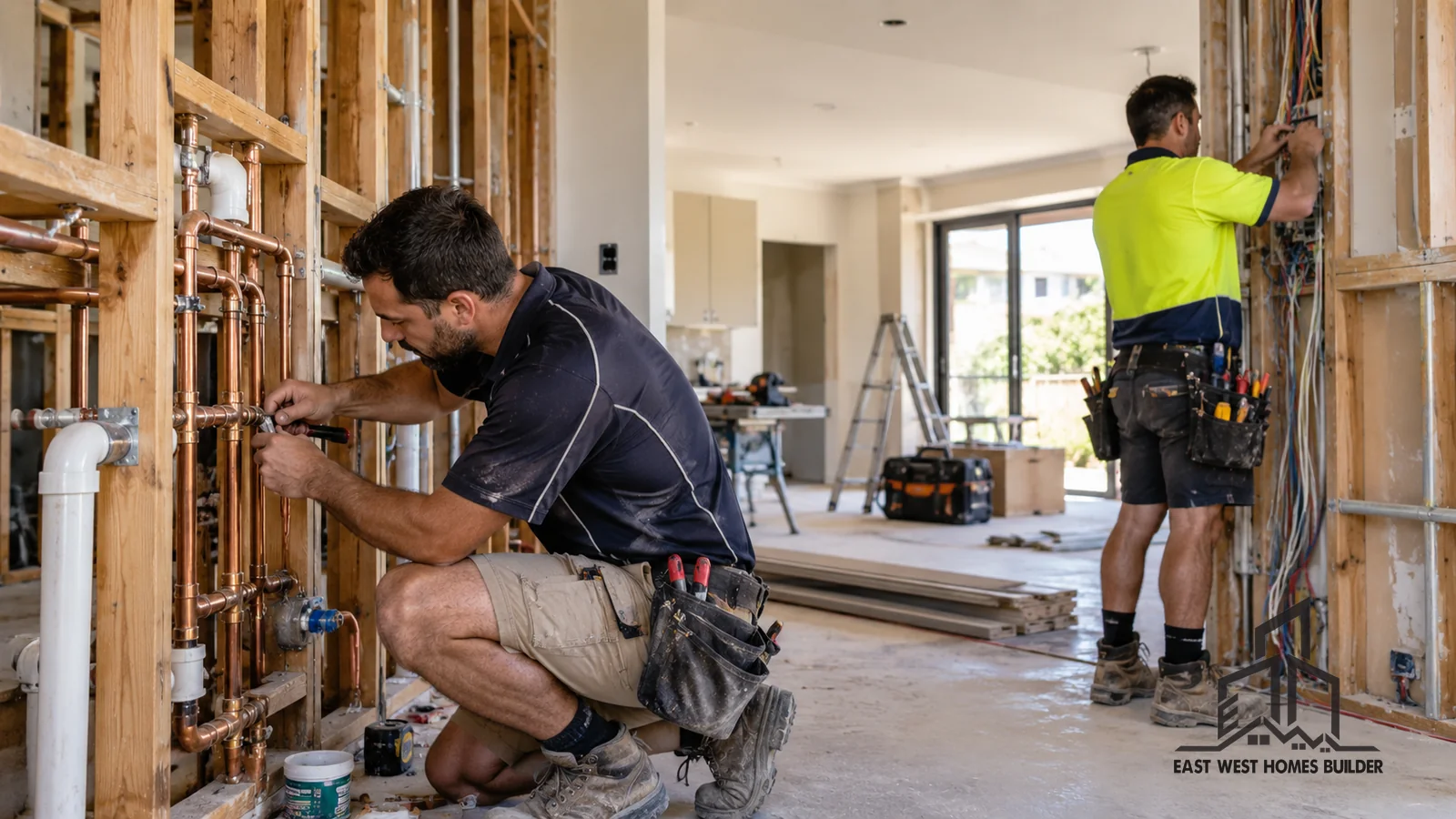
1. Removing or changing walls
A wall opening may need structural engineering, temporary support and careful service relocation. A plumber or electrician cannot independently decide the required beam or whether the load path is adequate. If an open-plan layout is under consideration, our guide to full wall removal versus a wider opening explains some of the design decisions worth investigating before a quote.
2. Renovating several wet areas
Bathrooms, laundry and kitchen work often share floor levels, drainage routes and waterproofing interfaces. Where multiple rooms are affected, their order matters. See the practical discussion of kitchen, bathroom and laundry sequencing.
3. Living in the house during construction
Occupied renovation work needs realistic decisions about dust, noise, access, temporary cooking or washing facilities and isolating working zones. A person must coordinate those measures as trades arrive and leave. The cheapest-looking quote is not always the one that has allowed for a safe, workable occupied site.
4. Working with an older home
Existing homes may conceal damaged subfloors, previous undocumented changes or inadequate service capacity. Build an investigation and decision process into the scope rather than assume every part of the old structure is sound. An inspection should identify uncertainties, not promise that no hidden conditions exist.
5. Handling changes after demolition
When new conditions are discovered, the project needs a clear procedure: document the issue, obtain a proposed response, understand time implications and approve a written variation before affected work proceeds where the contract requires it. Read our guide to renovation variations in Sydney for questions to raise.
Is using separate trades actually cheaper?
Sometimes individual trade quotations appear lower because there is no single builder’s coordination allowance in them. But the comparison only means something if the scopes are equivalent. Add the cost of demolition, protection, access equipment, waste handling, delivery, temporary works, inspections, preparation, reinstatement, consumables, trade reattendance and resolving mistakes.
Also allow for your time. Missing one critical trade booking can delay the next three activities. A task that looked cheaper in isolation can create costs elsewhere. Conversely, a small defined job may not justify a large contractor structure. Rather than assume one procurement approach costs more, compare the total complete scope, realistic exclusions and who owns the coordination risk.
When seeking prices, distribute the same drawings, finishes schedule and scope notes to everyone. In our renovation quote comparison checklist, we explain how to identify omissions rather than rely on the bottom-line number.
Check the NSW contract and insurance requirements
NSW rules apply to residential building work whether you use a builder or licensed tradespeople. The NSW Government states that residential building work above $5,000 including GST generally requires a written contract; work over $20,000 requires a more detailed large-job contract. A residential building contract deposit must not exceed 10% of its price. For work requiring Home Building Compensation cover, the relevant certificate must be in place before payment under the contract. Requirements depend on the nature and value of the work, so confirm the current rules for your project.
Start with the official NSW residential building contract guidance and the NSW Government contract checklist for homeowners. Check that the entity signing the contract holds the appropriate current licence for the scope. Do not assume every trade activity or small project follows the same approval or insurance pathway.
Some alterations may be exempt or complying development, while others require a DA, CDC or additional certification. The approval pathway depends on the property and the proposed work. Use the NSW Planning Portal renovation information and ask a qualified designer, council or certifier to confirm your circumstances before commencing regulated work.
What to bring to a renovation builder’s site meeting
You do not need perfect architectural drawings to have an initial conversation. You do need enough detail to avoid getting an unrealistic price for a different project. Prepare:
- The property address, approximate age and any known previous alterations.
- A list of what must change and what must remain.
- Photos, rough plans or drawings, plus any available survey or engineering information.
- Priorities for structural work, wet areas, windows, heating, cooling and finishes.
- A realistic total project budget including design, approvals and contingencies.
- Your preferred start window and any restrictions on site access.
- A decision on whether the house will be occupied during works.
- Questions about the contract, licensed supervision, insurance and exclusions.
Seven questions to ask before choosing either approach
- Who is legally responsible for each construction work package?
- Who prepares the programme and confirms work is ready for the next trade?
- Who organises engineering, approvals and mandatory inspections?
- Which items are excluded or treated as provisional allowances?
- Who arranges protection of occupied or retained areas?
- How are variations priced, approved and scheduled?
- Who manages defects that involve more than one trade?
Ask for clear answers in writing. If responsibilities are vague during tendering, they may be even less clear after demolition starts.
Frequently asked questions
Do I always need one builder for a whole-house renovation?
Not automatically. The scope and applicable NSW legal requirements determine who may perform or contract for the work. Complex projects usually benefit from explicit coordination, whether that is provided by a builder or another lawful arrangement.
Can I obtain separate trade prices before deciding?
Yes, provided you compare equivalent scopes and understand who will coordinate the interfaces. Use individual quotations as useful price evidence, but do not mistake a set of partial quotes for a complete construction budget.
What if I only want a bathroom refreshed?
A clearly defined single-room project may suit a specialist with the right licence and contract. Moving drainage, altering structural elements or combining several rooms increases the importance of integrated planning and documented responsibilities.
What should I do before asking for a fixed quotation?
Identify scope, selections, drawings, site constraints and unknown conditions. A builder can explain which investigations and documents are needed before an informed fixed-price offer is feasible.
Discuss the right renovation arrangement for your home

If you’re planning a substantial renovation in Sydney, the next step is not to choose a contract model from a headline. It is to clarify your scope, existing property conditions and the work that different trades must complete together. Contact East West Homes to discuss your renovation requirements and the information needed for a suitable project assessment and quotation.